

Bringing Calm to the Back-to-School Chaos: Supporting Your Family Through Transition
As summer winds down, most of us can feel that particular mix of excitement and dread that settles over households in late summer. New backpacks and school supplies sit by the door. Bedtimes are (attempted to be) moved earlier. And underneath it all, a low hum of anxiety: about new teachers, new schedules, new social dynamics, and whether everyone is going to make it through the first few weeks without a meltdown (kids and parents alike).
As clinicians, we see this every year. Families come in a little more frayed, a little more short-tempered, a little less sure of themselves. Since this is genuinely one of the more stressful transitions a family navigates each year, we want to normalize that experience and offer a few research-backed ways to move through it with more ease and connection.
Why This Transition Hits Families So Hard
It helps to name what's actually happening. Summer often loosens a family's structure with things like looser bedtimes, less predictable schedules, more unstructured time. The return to school asks everyone to tighten back up, often quickly, and that shift in itself is a stressor. Clinical writing on school transitions describes this as a period of genuine vulnerability for the child, the parents, and the parent-child relationship, since the whole family system has to reorganize around a new rhythm at once.
The good news is that this is a well-studied area of family psychology, and a few consistent themes emerge across the research about what actually helps.
1. Rebuild Predictability Before You Need It
If there's one finding that frequently shows up in the family psychology literature, it's that predictable routines are protective. Barbara Fiese's decades of research on family routines and rituals has consistently linked stable routines to better parenting confidence, stronger child adjustment, and greater family relationship satisfaction. A more recent systematic review extended this further, finding that routines are associated with healthier child development across language, academic, and social-emotional domains, and that the protective effects of routine can extend well into adolescence and young adulthood.
Practically, this means the week or two before school starts is worth treating as a runway, not a light switch. Start shifting bedtime and wake time gradually rather than all at once. Rebuild a visible structure for the day (by using things like a whiteboard, a shared calendar, a simple checklist by the door) so your child knows what to expect. Predictability doesn't need to be rigid to be effective; it just needs to be reliable enough that your child's nervous system can relax into it.
2. Regulate Yourself First. Your Calm Is Contagious.
It can feel counterintuitive, but one of the most effective things you can do for your child's stress during this transition is manage your own. Psychologist Amanda Sheffield Morris and colleagues' influential "tripartite model" of family emotion socialization describes three pathways through which parents shape how children learn to regulate emotion: children observing how parents handle their own stress, the specific ways parents respond to a child's big feelings, and the overall emotional climate of the household. In other words, children are constantly reading our nervous systems, not just our words.
This doesn't mean you need to be a picture of serenity every morning (hint: no parent is). It means that when you do feel your own stress spike, narrating your own coping out loud ("I'm feeling rushed, let me take a breath") does more for your child's long-term emotional development than trying to hide the stress altogether. Kids don't need stress-free parents; they need parents who show them what handling stress looks like.
3. Make Space for the "Bids.” Small Moments of Connection Matter More Than Big Ones
Research on close relationships, including work coming out of the Gottman Institute, has found that what predicts relational strength isn't grand gestures, it's how consistently people respond to each other's small, everyday bids for attention and connection. Applied to parenting, this means the two minutes at pickup where your child mentions something odd that happened at recess, or the offhand comment about a classmate at dinner, matter more than we tend to assume. Being curious, turning toward those small moments, and repairing when a rupture happens (an irritable morning, a short exchange) all build the felt sense of security your child is drawing on as they head into a less familiar environment.
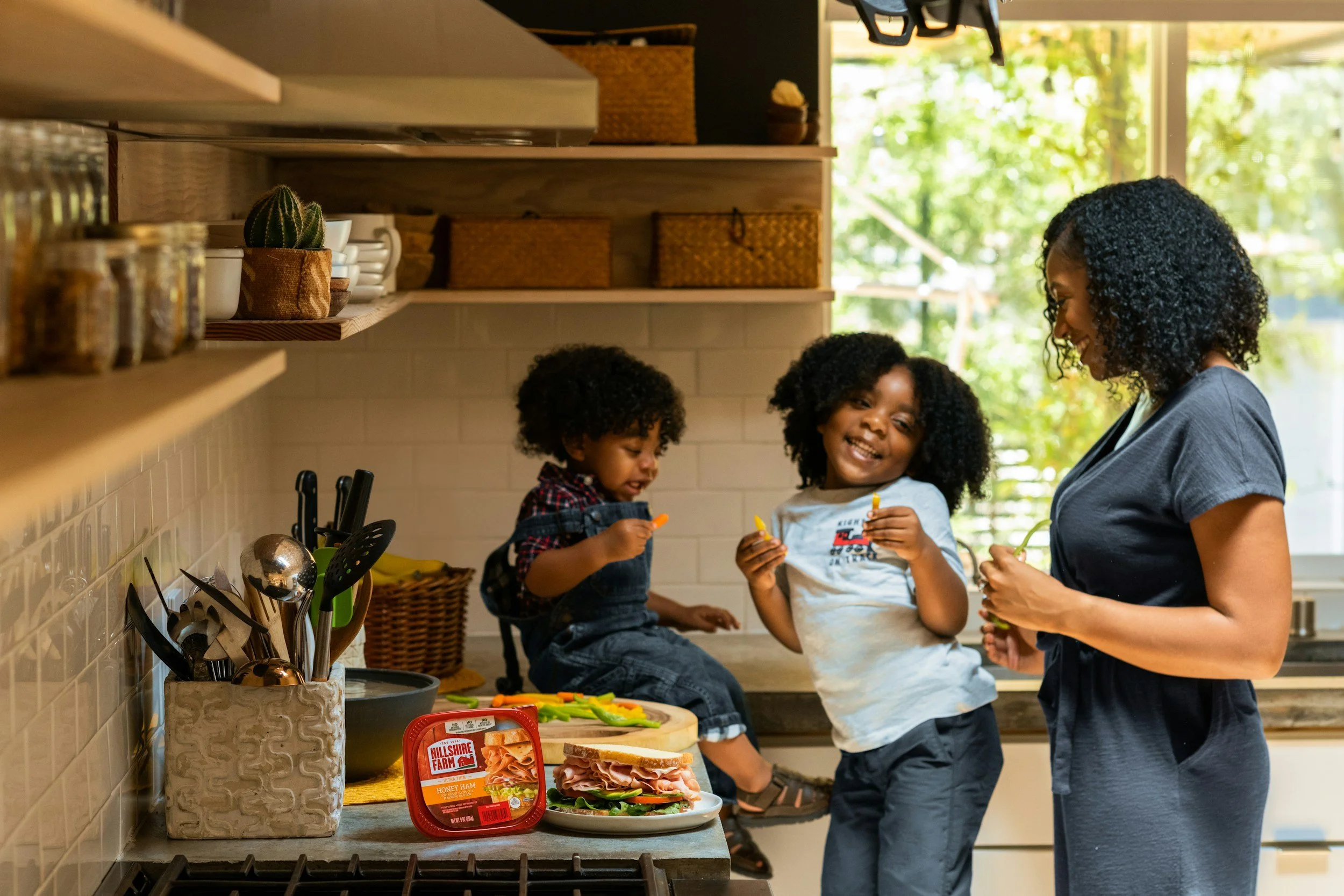
4. Talk About It Directly Using Curiosity Over Reassurance
It's tempting to respond to a child's back-to-school worry with quick reassurance like "You'll be fine!" Parenting frameworks such as Triple P (Positive Parenting Program) instead emphasize starting low-key, curious conversations well before the first day: What are you looking forward to? Which friends are you excited to see? What feels uncertain? If worry surfaces, the more useful move is often to get curious about it rather than talk your child out of it. This also gives you real information to understand them better. A child who's nervous about a new teacher needs something different from a child who's anxious about a friendship that shifted over the summer.
For children starting somewhere new entirely, walking the building, meeting a teacher ahead of time, or looking at photos of the classroom can meaningfully lower first-day anxiety by replacing the unknown with something concrete.
5. Protect Sleep (Especially From Screens)
This one is less about parenting philosophy and more about biology. A large meta-analysis published in JAMA Pediatrics found a consistent association between having a screen-based device in the bedroom overnight and worse sleep outcomes for children including shorter duration, poorer quality, more daytime fatigue. Given how much back-to-school stress shows up as short tempers and emotional volatility, and how much of that is downstream of poor sleep, one of the highest-leverage moves available to a family is simply getting devices out of bedrooms overnight as the school routine resets.
6. Remember: Parental Stress Is Part of the System, Not Separate From It
It's worth saying plainly: your stress is not a side issue to your child's transition. Rather, it's part of the same system. A randomized controlled trial of a parent-training program aimed at easing the transition to primary school found that the intervention meaningfully reduced harsh parenting practices and strengthened the parent-child relationship, even though it didn't fully eliminate parents' own stress. That distinction matters. You don't have to get your own stress to zero for your parenting to shift in protective ways. But small, consistent changes in how you respond to your child are doing real work even on the days you still feel frazzled.
If you notice your own stress climbing this season (watch out for irritability, sleep disruption, feeling constantly behind) that's not a personal failing, it's a signal. Support for you is support for your whole family.

A Gentle Reminder
Transitions are, by definition, unsettled periods for children and for the adults raising them. You don't need to engineer a perfectly smooth start to the school year. You need a household with enough predictability to feel steady, enough emotional honesty to feel safe, and enough small moments of connection to feel close. That's genuinely within reach, even in a busy August and September.
If you or your family is finding this transition especially difficult this year, whether that's a child's anxiety that isn't easing, escalating conflict at home, or your own stress feeling unmanageable, give us a call or shoot us an email. Our clinicians are here and would be glad to help you find some steadier footing.
References
Fiese, B. H., Tomcho, T. J., Douglas, M., Josephs, K., Poltrock, S., & Baker, T. (2002). A review of 50 years of research on naturally occurring family routines and rituals: Cause for celebration? Journal of Family Psychology, 16(4), 381–390.
Selman, K. J., et al. (2024). Routines and child development: A systematic review. Journal of Family Theory & Review.
Morris, A. S., Silk, J. S., Steinberg, L., Myers, S. S., & Robinson, L. R. (2007). The role of the family context in the development of emotion regulation. Social Development, 16(2), 361–388.
Morris, A. S., et al. (2017). The impact of parenting on emotion regulation during childhood and adolescence. Child Development Perspectives.
The Gottman Institute. Research on "bids" for connection and repair in relationships.
Positive Parenting Program (Triple P). Guidance on preparing children for the back-to-school transition.
Wong, W. C. W., et al. Effectiveness of a parental training programme in enhancing the parent–child relationship and reducing harsh parenting practices and parental stress in preparing children for their transition to primary school: a randomised controlled trial.
JAMA Pediatrics. Meta-analysis on portable screen-based media device access/use and sleep outcomes in children.