
Panic Attacks: What's Happening in Your Body and What Actually Helps
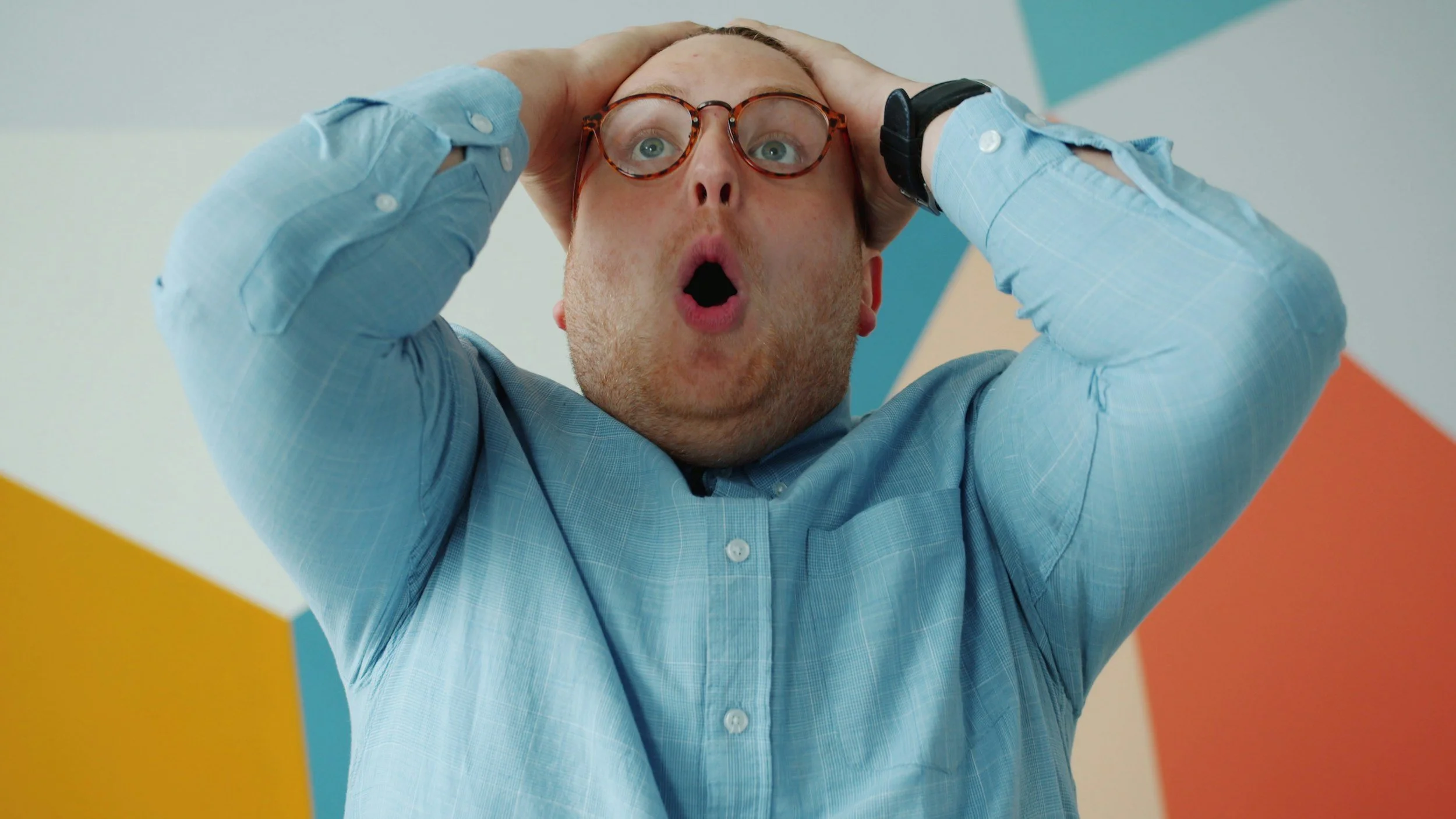
Most people who have a panic attack for the first time believe they are dying.
That is not a figure of speech. The chest tightens. The heart slams. Air seems to stop arriving no matter how hard you pull for it. Many people drive themselves to an emergency room certain they are having a heart attack, and a large share of people with panic disorder do end up in an emergency department at some point (Cackovic et al., 2023). Hours later they are told their heart is fine and sent home, often with no real explanation of what just happened to them.
This post is that explanation.
What a panic attack actually is
The diagnostic definition is an abrupt surge of intense fear or discomfort that reaches its peak within minutes, accompanied by at least four of the following (American Psychiatric Association, 2013):
• Pounding heart or accelerated heart rate
• Sweating, trembling, or shaking
• Shortness of breath or a sense of being smothered
• Feeling of choking
• Chest pain or discomfort
• Nausea or abdominal distress
• Dizziness, lightheadedness, or faintness
• Chills or heat sensations
• Numbness or tingling
• Feelings of unreality or detachment from yourself
• Fear of losing control or "going crazy"
• Fear of dying
The word doing the most work in that definition is peak. A panic attack is not a state you get stuck in. It is a surge: it climbs fast, crests, and comes down. That shape matters more than most people realize, and we will come back to it.
The false alarm
Your body carries a threat-response system that is older than language. When it detects danger, it does not deliberate. The sympathetic nervous system floods your bloodstream with adrenaline, your heart accelerates to move blood to large muscles, your breathing quickens, your pupils widen, digestion stops. Every one of those changes is useful if you are about to run or fight.
In a panic attack, that system fires when there is nothing to run from. The machinery is working exactly as designed. It is simply going off at the wrong moment, like a smoke alarm triggered by a hot shower. Nothing is broken. Something is miscalibrated.
This distinction is not a reassuring turn of phrase. It is the clinical reality, and it is the reason panic responds so well to treatment.
The breathing paradox
Here is the part that surprises people most, and the part that changes what you do in the moment.
When you breathe faster and deeper than your body needs, you exhale carbon dioxide faster than you produce it. Blood carbon dioxide drops, your blood chemistry shifts toward alkalinity (respiratory alkalosis), and blood vessels narrow, including the ones supplying your brain (Cleveland Clinic, 2024).
That narrowing is what produces the lightheadedness, the tingling in your hands and face, the chest tightness, and the eerie sense that the world has gone unreal. Not oxygen deprivation. Blood oxygen is typically normal throughout.
Which leads to the cruel irony at the center of panic: the feeling of not getting enough air is usually caused by having too little carbon dioxide, not too little oxygen. Breathing harder makes it worse.
Why it peaks and passes
Adrenaline is metabolized. Your body cannot sustain a full sympathetic surge indefinitely, which is why panic attacks crest within minutes rather than continuing forever. The terror during an attack is real and it is enormous, but the physiology underneath it is self-limiting.
Knowing this changes what you do. If the surge will come down on its own, your task is not to stop it. Your task is to get through it without doing things that feed it.
A panic attack is not panic disorder
One panic attack, even a severe one, is not a disorder. Panic attacks occur in many conditions and sometimes in people with no diagnosis at all.
Panic disorder describes something more specific: recurrent unexpected attacks plus at least a month of persistent worry about having more of them, or meaningful changes in behavior to avoid them (American Psychiatric Association, 2013). An estimated 2.7% of U.S. adults meet criteria in a given year and 4.7% at some point in their lives. Women are affected at more than twice the rate of men (3.8% compared with 1.6%), and among those affected in the past year, nearly 45% reported serious impairment (National Institute of Mental Health, n.d.).
The fear of fear
What converts isolated attacks into a disorder is rarely the attacks themselves. It is what happens in between.
After a frightening episode, people begin monitoring. A skipped heartbeat, a flush of warmth, a moment of dizziness in a grocery aisle: sensations that would have gone unnoticed before now register as warnings. The monitoring itself generates arousal, and arousal generates more sensations to monitor.
Then avoidance arrives. You stop taking the highway. You sit near exits. You carry water, or medication you never take, or you only go places with someone else. Each of these brings genuine relief in the moment, and each one quietly teaches your nervous system that the alarm was right and the danger was real. Avoidance is how panic protects itself.
What helps during an attack
• Name what is happening. "This is a panic attack. It peaks and it passes." Labeling is not a trick to make the fear disappear. It interrupts the escalation from frightening sensation to catastrophic interpretation.
• Stop fighting for air. Slow down and lengthen the exhale, out longer than in. You are not short of oxygen; you are short of carbon dioxide. Slower breathing restores the balance that is producing the worst sensations.
• Let it crest. Fighting a panic attack is like bracing against a wave. The struggle adds nothing and costs a great deal. Allowing the surge to rise and fall is usually faster than trying to shut it down.
• Stay where you are, if you safely can. Leaving brings immediate relief and teaches the wrong lesson. Staying, even badly, even while frightened, is what teaches your body that the place was never the problem.
None of this is easy, and doing it alone during a genuine surge of terror is harder than any description makes it sound. It gets meaningfully easier with practice and with guidance.
What helps over time
Cognitive behavioral therapy is the best-supported treatment for panic disorder and is widely described as the gold standard (National Institute of Mental Health, n.d.). A network meta-analysis of 74 randomized controlled trials covering 6,699 participants found CBT superior to treatment as usual across delivery formats: face-to-face group (SMD −0.47), face-to-face individual (SMD −0.43), and guided self-help (SMD −0.42), with no meaningful differences among them. Unguided self-help, notably, was not superior to treatment as usual (Papola et al., 2023).
That last finding is worth sitting with. The format of treatment matters far less than whether someone is guiding it. Working through material on your own is not the same intervention as working through it with a clinician.
A central component is interoceptive exposure: deliberately bringing on the physical sensations of panic in a controlled setting (spinning to produce dizziness, breathing through a straw to produce breathlessness) until the sensations stop signaling catastrophe. It sounds counterintuitive. It works because the fear attaches to the sensations themselves, and the only durable way to unlearn that association is to encounter them and discover nothing bad follows.
Medication also has a role. SSRIs and SNRIs are effective and are typically first-line, though they take several weeks to reach full benefit. Benzodiazepines reduce symptoms quickly but carry dependence risk and are generally not a long-term solution (National Institute of Mental Health, n.d.). These decisions belong in a conversation with a prescriber who knows your history.
One important caveat
Nothing in this post is a substitute for a medical evaluation. Chest pain, heart palpitations, and shortness of breath have cardiac and pulmonary causes as well as psychological ones, and thyroid conditions and certain medications can produce panic-like episodes. If you have never been evaluated for these symptoms, get evaluated. Knowing your heart is healthy is not just medically sound; it removes a legitimate source of fear and makes psychological treatment more effective.
If you recognize yourself in this, you are not fragile and you are not broken. You are dealing with a well-understood condition that responds to well-established treatment, and you do not have to work it out alone.
Our clinicians at CPGR provide evidence-based care for panic and anxiety, and we are currently accepting new patients. Reach out when you are ready. We would be glad to talk with you.
References
American Psychiatric Association. (2013). Diagnostic and statistical manual of mental disorders (5th ed.). American Psychiatric Publishing.
Cackovic, C., Nazir, S., & Marwaha, R. (2023). Panic disorder. In StatPearls. StatPearls Publishing. https://www.ncbi.nlm.nih.gov/books/NBK430973/
Cleveland Clinic. (2024). Hyperventilation syndrome. https://my.clevelandclinic.org/health/diseases/24860-hyperventilation-syndrome
National Institute of Mental Health. (n.d.). Panic disorder: When fear overwhelms. https://www.nimh.nih.gov/health/publications/panic-disorder-when-fear-overwhelms
National Institute of Mental Health. (n.d.). Panic disorder statistics. Data from the National Comorbidity Survey Replication. https://www.nimh.nih.gov/health/statistics/panic-disorder
Papola, D., Ostuzzi, G., Tedeschi, F., Gastaldon, C., Purgato, M., Del Giovane, C., Pompoli, A., Pauley, D., Karyotaki, E., Sijbrandij, M., Furukawa, T. A., Cuijpers, P., & Barbui, C. (2023). CBT treatment delivery formats for panic disorder: A systematic review and network meta-analysis of randomised controlled trials. Psychological Medicine, 53(3), 614-624. https://doi.org/10.1017/S0033291722003683